
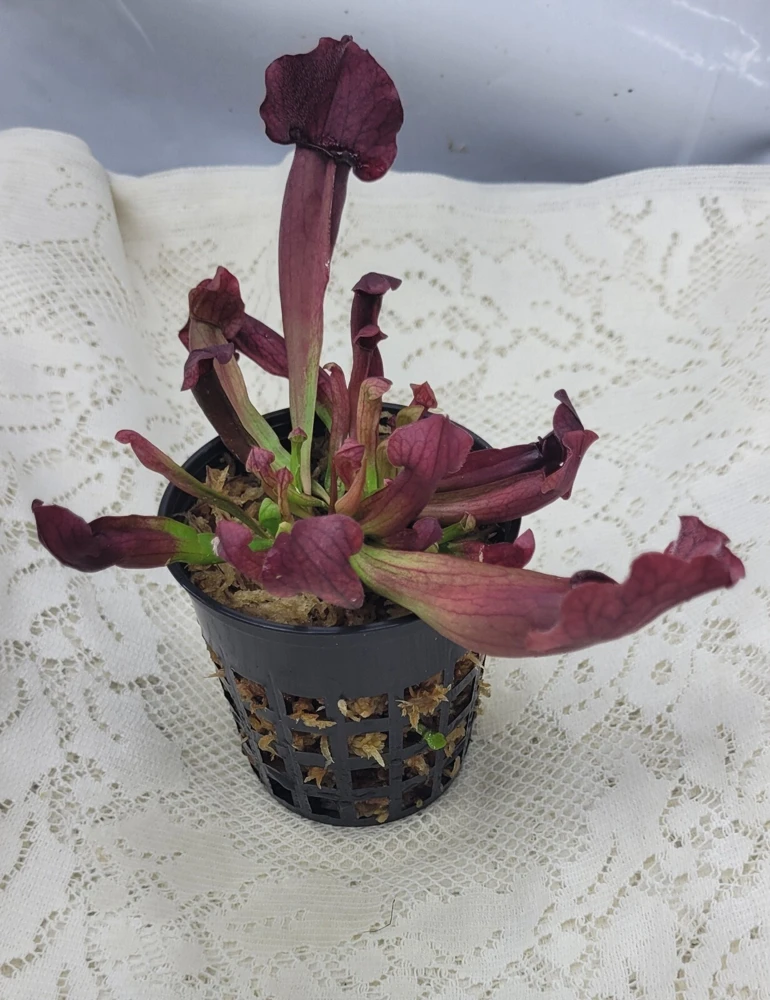
Sarracenia Catesbaei Pitcher Plant – Live Carnivorous Plant – 3.75 inch Net Pot – Potted – Indoor
Original price was: $76.99.$51.99Current price is: $51.99.
Bring home a fascinating Sarracenia Catesbaei pitcher plant in a 3.75 inch net pot. This unique carnivorous plant care is surprisingly straightforward, making it an excellent choice for adding natural insect control and exotic beauty to your indoor space. Perfect for collectors and beginners alike.
Estimated arrival
Sep 29
Oct 04 - Oct 06
Oct 09 - Oct 13
Shop With Confidence
30-Day Plant Health Guarantee
Arrives damaged? We’ll replace it free — see our return policy.
Responsive Support
Email us anytime, we reply within 1 business day.
Expert Packaging
Temperature-controlled shipping to protect your plants in transit.
Secure Checkout
Pay safely with Visa, Mastercard, PayPal.
Plant Specifications
-
USDA Hardiness Zone
USDA zones 6-9 (or year-round indoors) -
Soil Type
Acidic peat-based mix (peat moss and perlite/sand) -
Sunlight Exposure
Full sun (6-8+ hours direct sunlight) -
Expected Planting Period
Year-round indoors; spring for outdoor placement
Overview
Introducing the captivating Sarracenia Catesbaei pitcher plant, a mesmerizing addition to any plant collection. This striking live carnivorous plant is renowned for its vibrant, upright pitchers that naturally attract and trap insects, offering both an intriguing display and an eco-friendly pest solution. Each Sarracenia Catesbaei pitcher plant arrives healthy and ready to thrive, potted in a convenient 3.75 inch net pot, making it easy to integrate into your existing indoor garden or a dedicated bog setup. Native to the southeastern United States, this hybrid American pitcher plant is a cross between Sarracenia flava and Sarracenia purpurea, inheriting the best characteristics of both parents, including beautiful coloration and robust growth.
The Sarracenia Catesbaei is a true marvel of the plant world, showcasing nature’s ingenious design. Its unique pitcher-shaped leaves are not only functional but also highly ornamental, featuring a mix of green, red, and purple hues that intensify with proper sunlight. This particular specimen is a fantastic choice for those looking to explore the world of carnivorous plants without extensive prior experience. It’s a living, breathing piece of art that actively contributes to its environment, making it a truly rewarding plant to observe and care for.
Key Benefits
Owning a Sarracenia Catesbaei pitcher plant offers a multitude of benefits, from its aesthetic appeal to its practical utility and educational value. This unique plant is more than just a decorative item; it’s a dynamic and engaging part of your home environment.
- Natural Insect Control: The primary benefit of the American pitcher plant is its remarkable ability to naturally control flying insects like flies and mosquitoes. Its nectar-producing rim and slippery inner walls are perfectly designed to lure and trap pests, providing an organic solution without chemicals.
- Exotic Aesthetic Appeal: With its distinctive pitcher-shaped leaves and often dramatic coloration, the Sarracenia Catesbaei adds a touch of the exotic and unusual to any indoor setting. It’s a conversation starter and a focal point for plant enthusiasts.
- Educational Value: Observing the carnivorous mechanisms of this plant provides an excellent learning opportunity for all ages. It’s a fascinating way to understand plant biology and ecological interactions firsthand, perfect for curious minds.
- Low Maintenance for a Carnivore: While specific conditions are necessary, carnivorous plant care for Sarracenia Catesbaei is generally considered manageable. Once its basic needs for light, water, and soil are met, it requires minimal intervention.
- Adaptable to Indoor Environments: This Sarracenia variety is well-suited for indoor cultivation, especially when provided with adequate light. It can thrive on a sunny windowsill or under grow lights, making it an accessible option for urban dwellers.
- Unique Decorative Element: Beyond its practical uses, the Sarracenia Catesbaei serves as a vibrant, living sculpture. Its architectural form and striking colors enhance modern and traditional decor alike, adding a unique green element.
- Supports Biodiversity: By nurturing an American pitcher plant, you participate in appreciating and preserving unique plant species, contributing to the broader understanding and conservation of biodiversity.
Plant Care & Growing Tips
Proper carnivorous plant care is crucial for the health and vitality of your Sarracenia Catesbaei pitcher plant. These plants thrive in conditions that mimic their natural bog habitats. They require consistent moisture, specific light levels, and the right soil composition to flourish and develop their impressive pitchers.
Sunlight requirements: Sarracenia Catesbaei needs plenty of bright light to develop strong pitchers and vibrant coloration. Aim for at least 6-8 hours of direct sunlight daily. An East-facing window is a good start, but South or West-facing windows are often ideal indoors. If natural light is insufficient, supplementing with a full-spectrum grow light for 12-14 hours a day will encourage robust growth. Insufficient light will result in weak, leggy growth and pale pitchers. For an optimal Sarracenia plant indoor setup, consider placing it near a window that receives morning sun and bright indirect light throughout the afternoon.
Watering schedule and soil moisture preferences: These plants are bog dwellers and demand consistently moist to wet soil. Always use distilled water, rainwater, or reverse osmosis water, as tap water often contains minerals that are harmful to carnivorous plants. The tray method is highly recommended: place the potted plant in a tray filled with about 1 inch of water. Allow the tray to dry out completely for a day or two before refilling. This mimics natural flood and dry cycles and prevents root rot. During dormancy (winter), reduce watering but never let the soil dry out completely. Heavy watering is key to a healthy Sarracenia Catesbaei pitcher plant.
Soil type and drainage requirements: The correct soil mix is vital. Sarracenia Catesbaei requires a nutrient-poor, acidic soil that retains moisture well but also allows for some aeration. A common and effective mix is a 1:1 ratio of peat moss (sphagnum peat moss, not coir) and perlite or horticultural sand. Avoid standard potting soil, which is too rich in nutrients and can harm the plant. Good drainage is implicitly handled by the tray method and the sandy/perlite component of the soil mix, preventing stagnation while maintaining moisture.
Temperature range and USDA hardiness zone: Sarracenia Catesbaei is hardy in USDA zones 6-9, but as an indoor plant, it prefers moderate room temperatures, ideally between 60-85°F (15-29°C) during the growing season. A cool dormancy period (35-50°F / 2-10°C) for 3-4 months in winter is beneficial for long-term health and vigor, which can be achieved by placing it in an unheated garage or cool windowsill. This dormant period is crucial for the health of your Sarracenia Catesbaei pitcher plant and ensures vigorous growth in the spring.
Fertilization schedule and type: Do NOT fertilize Sarracenia Catesbaei through the soil. These plants obtain their nutrients from the insects they catch. Fertilizing their roots can quickly lead to root burn and death. If the plant is not catching enough insects, you can occasionally drop a small, freshly killed insect into a few pitchers, but this is rarely necessary for a healthy indoor plant. Ensure you are providing adequate light to encourage pitcher development and insect attraction.
Common problems and solutions: The most common issues arise from incorrect water (tap water), insufficient light, or improper soil. If pitchers are not forming or are turning brown, check your water source and light exposure first. Yellowing leaves can indicate too much direct sun for an unacclimated plant, or a need for more water. Pests are rare, as the plant typically handles them itself. Ensuring proper carnivorous plant care will prevent most problems.
Size & Details
This offering is for one healthy Sarracenia Catesbaei pitcher plant, carefully cultivated and ready for its new home. Each plant is supplied in a 3.75 inch net pot, which is ideal for its initial growth and provides excellent aeration for the roots. The plants typically measure between 4-8 inches tall upon arrival, depending on the growing season and individual plant development. As a deciduous species, it will experience periods of dormancy where older pitchers may die back, only to return with renewed vigor in the spring. This natural cycle is part of maintaining a healthy Sarracenia plant indoor.
The growth rate of the Sarracenia Catesbaei is moderate, and with optimal bog garden plants conditions, it can reach mature heights of 12-18 inches over several years. The plant will arrive well-rooted in its net pot, nestled in a suitable peat-based medium. Expect to see new pitchers emerging regularly during its active growing season (spring through fall). Repotting may be necessary every 1-2 years into a slightly larger pot, always using the recommended peat/perlite mix and distilled water. This specific size is perfect for starting your Sarracenia Catesbaei pitcher plant collection or adding to an existing display.
Frequently Asked Questions
- Q: How big does this plant get? A: The Sarracenia Catesbaei pitcher plant typically arrives around 4-8 inches tall. With proper care, it can grow to a mature height of 12-18 inches, showcasing its impressive pitchers.
- Q: What size pot does it come in? A: Each American pitcher plant is shipped in a 3.75 inch net pot, perfectly sized for its current growth and easy integration into your setup.
- Q: Is this an indoor or outdoor plant? A: While Sarracenia Catesbaei can be grown outdoors in appropriate climates (USDA zones 6-9), it is also an excellent Sarracenia plant indoor, especially with sufficient light, making it versatile.
- Q: How much sunlight does it need? A: This carnivorous plant requires a minimum of 6-8 hours of direct sunlight daily. Bright, sunny windows or supplemental grow lights are essential for vibrant pitchers and healthy growth.
- Q: Is this plant easy to care for? A: With a clear understanding of its specific needs (distilled water, peat soil, plenty of sun), carnivorous plant care for Sarracenia Catesbaei is manageable for beginners and experienced growers alike.
- Q: What condition will it arrive in? A: Your Sarracenia Catesbaei pitcher plant will arrive healthy, well-rooted, and carefully packaged to ensure its safe journey to your home. It will be ready to thrive in its new environment.
- Q: Is it shipped in soil? A: Yes, the plant is shipped in its 3.75 inch net pot, securely nestled in its appropriate peat-based carnivorous plant soil mix.
- Q: How long until it blooms? A: Sarracenia Catesbaei typically blooms in spring, producing unique flowers before or concurrently with its pitchers. Mature plants that have undergone proper dormancy are more likely to bloom.
- Q: When is the best time to plant? A: As a potted plant, it can be ‘planted’ (or placed in its permanent location) year-round indoors. If moving outdoors, spring is generally the best time after the last frost.
- Q: What’s the minimum temperature it can tolerate? A: During its dormancy period, the plant can tolerate temperatures down to 35°F (2°C). During the growing season, it prefers temperatures above 60°F (15°C).
- Q: Can I put this in a bog garden plants setup? A: Absolutely! The Sarracenia Catesbaei pitcher plant is a perfect candidate for a bog garden, thriving in the consistently wet, acidic conditions that mimic its natural habitat.
Be the first to review “Sarracenia Catesbaei Pitcher Plant – Live Carnivorous Plant – 3.75 inch Net Pot – Potted – Indoor”
People Also Viewed
Reviews
There are no reviews yet.