
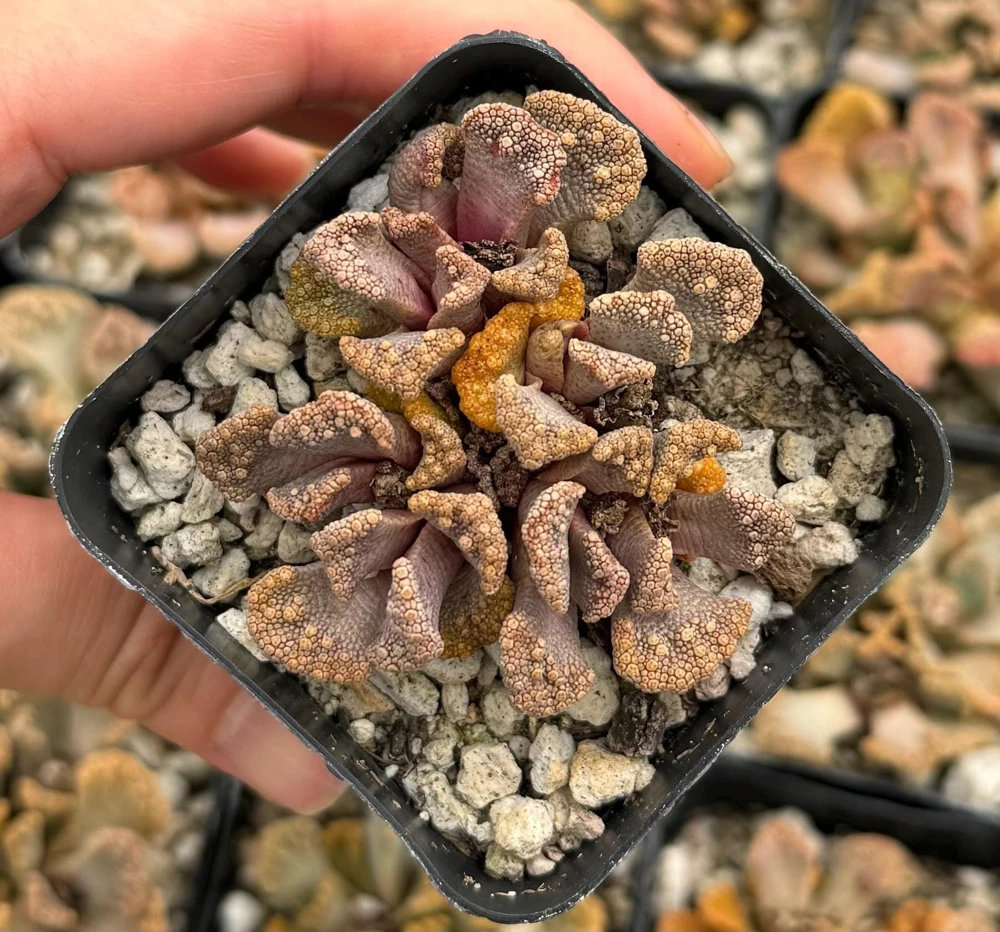
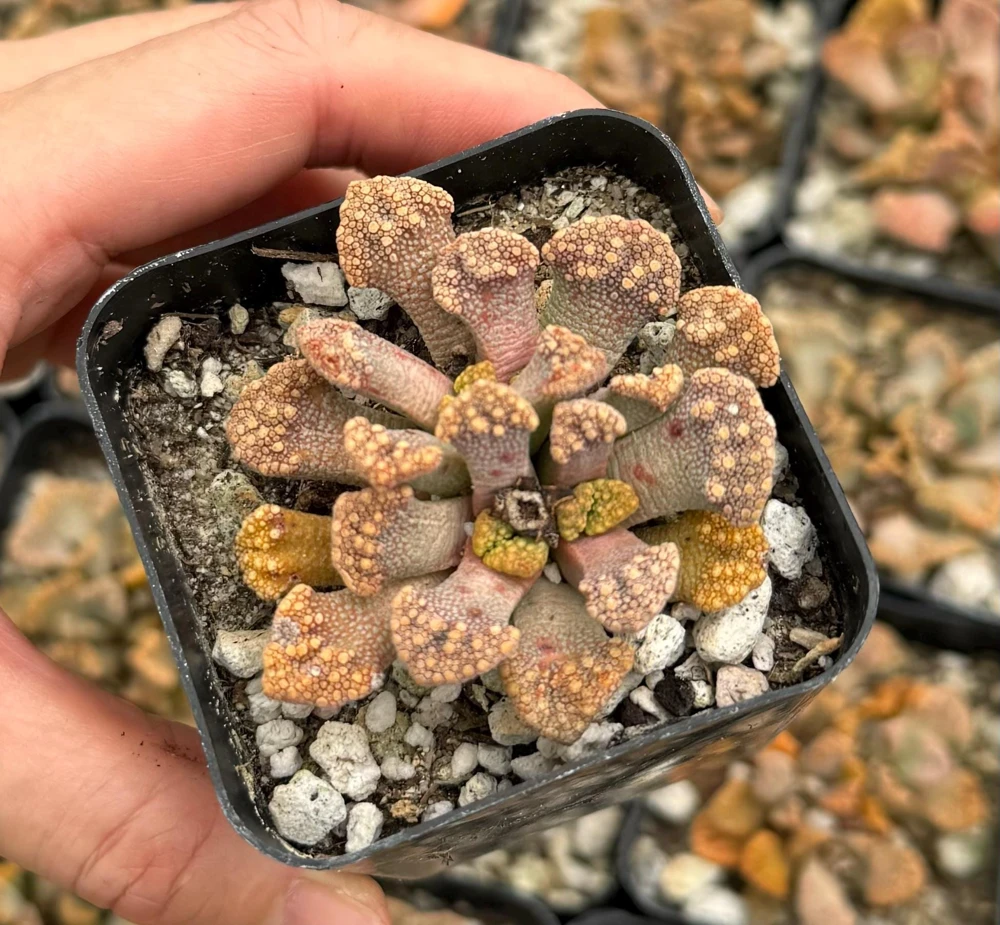
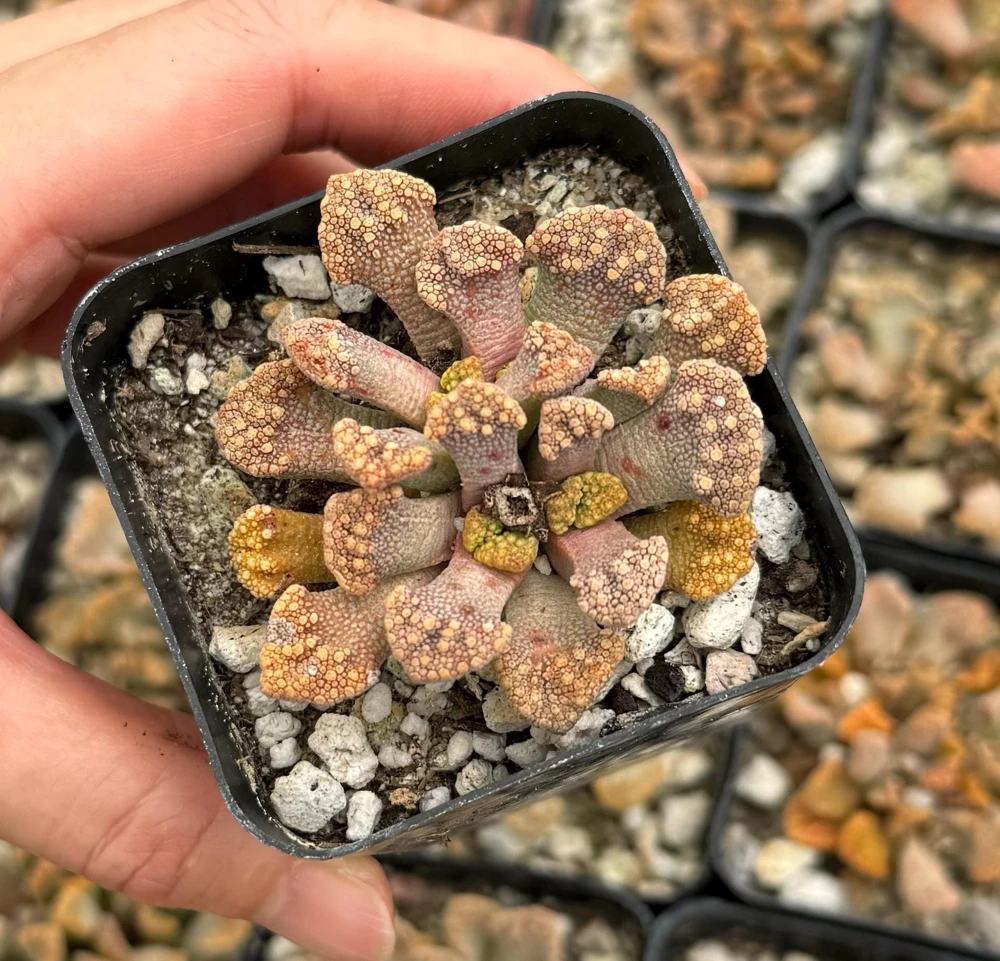
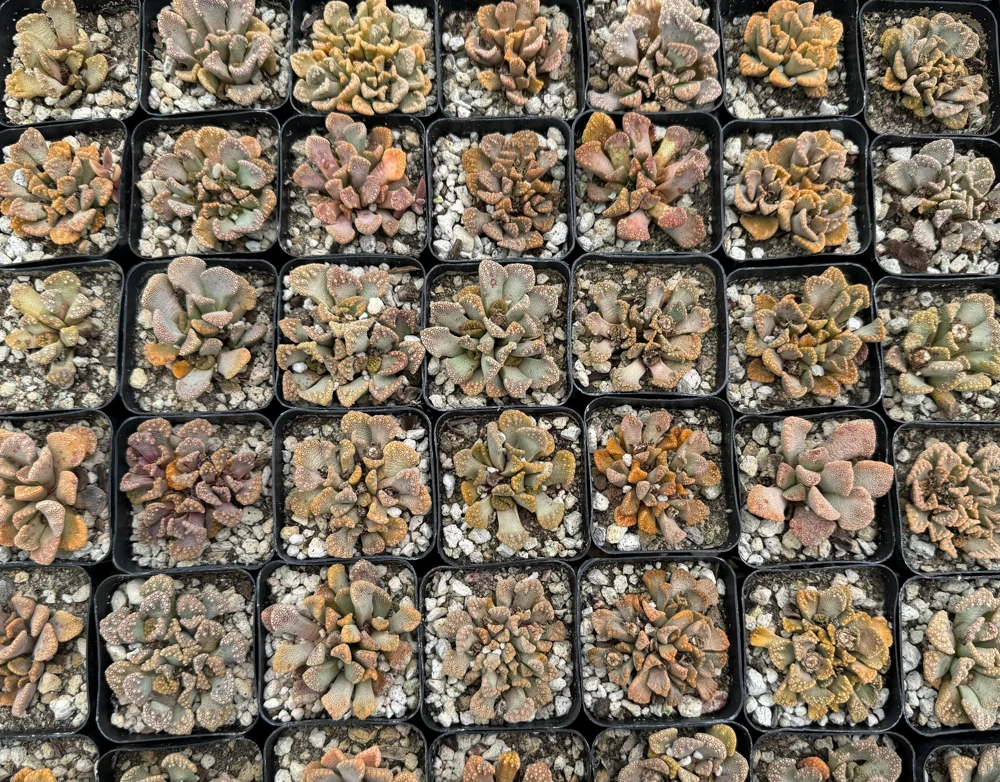
Titanopsis calcarea Concrete Leaf Succulent Live Plant, Jewel Plant in 2 Inch Pot, Indoor
Original price was: $37.08.$17.08Current price is: $17.08.
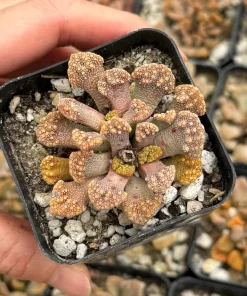
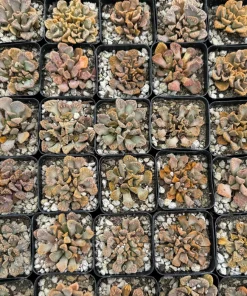
Bring home a fascinating Titanopsis calcarea live plant, known as Concrete Leaf or Jewel Plant. This 2 inch potted succulent features unique, stone-like leaves, making it a standout addition to any collection. It’s a low-maintenance, drought-tolerant choice for indoor display or rock gardens, offering distinctive texture and subtle color variations.
Estimated arrival
Oct 23
Oct 28 - Oct 30
Nov 02 - Nov 06
Shop With Confidence
30-Day Plant Health Guarantee
Arrives damaged? We’ll replace it free — see our return policy.
Responsive Support
Email us anytime, we reply within 1 business day.
Expert Packaging
Temperature-controlled shipping to protect your plants in transit.
Secure Checkout
Pay safely with Visa, Mastercard, PayPal.
Plant Specifications
-
USDA Hardiness Zone
USDA zones 9–11 (outdoors) or indoor cultivation -
Soil Type
Well-draining cactus or succulent mix -
Sunlight Exposure
Bright indirect light; tolerates direct morning/late afternoon sun -
Expected Planting Period
Year-round indoors; spring for outdoor planting in suitable zones
Overview
Introduce an extraordinary botanical specimen to your collection with the Titanopsis calcarea live plant. Also affectionately known as the Concrete Leaf or Jewel Plant, this remarkable succulent hails from the arid landscapes of South Africa. Valued for its unparalleled aesthetic, the Titanopsis calcarea live plant boasts uniquely textured leaves that mimic the appearance of small stones or concrete, providing natural camouflage in its native environment. This rare succulent plant is a true conversation starter, offering a distinctive architectural element to any indoor plant display or rock garden. Its captivating form and subtle beauty make it a must-have for succulent enthusiasts and collectors seeking something truly out of the ordinary.
Each Titanopsis calcarea live plant is a testament to nature’s artistry, growing in a compact rosette form. The small, thick leaves are covered with rough, wart-like tubercles, enhancing their stone-like illusion. Typically gray-green, these leaves can develop beautiful hues of blue, purple, or pink when exposed to bright light, adding another layer of visual interest. This rare succulent plant is not just a plant; it’s a living sculpture, embodying resilience and unique charm. Its slow growth rate and relatively low maintenance requirements make it an accessible yet exotic choice for both seasoned collectors and those new to the world of succulents.
Key Benefits
The Titanopsis calcarea live plant offers a multitude of benefits, making it an excellent choice for a variety of settings and plant enthusiasts. Its unique characteristics contribute to its appeal as both a decorative and easy-to-care-for specimen.
- Unique Ornamental Appeal: The primary benefit of the Titanopsis calcarea live plant is its incredibly distinctive appearance. Its leaves truly resemble small, textured stones or concrete, providing an unparalleled aesthetic that stands out in any succulent collection or home decor. This natural camouflage makes it a fascinating focal point.
- Low Maintenance: This succulent is remarkably easy to care for, requiring minimal attention once its basic needs are met. It thrives on neglect, making it perfect for busy individuals or those new to plant ownership who want a beautiful yet undemanding plant.
- Drought Tolerant: As a desert native, the Concrete Leaf succulent is highly drought-tolerant. It stores water in its thick leaves, allowing it to withstand long periods without watering, significantly reducing the risk of overwatering and making it very forgiving.
- Compact Size: Growing to a modest 2-3 inches in diameter, the Jewel Plant succulent is ideal for small spaces. It fits perfectly on windowsills, desks, terrariums, or as part of a miniature succulent garden, bringing natural beauty without taking up much room.
- Subtle Blooms: During late fall or winter, this plant surprises with small, daisy-like flowers, typically yellow or orange. These vibrant blooms provide a beautiful contrast to the plant’s muted foliage, adding an unexpected splash of color during colder months.
- Collector’s Item: Due to its striking appearance and relatively uncommon nature, the Titanopsis calcarea live plant is highly sought after by succulent collectors. Owning one adds a unique and prestigious piece to any botanical assortment.
- Versatile Display: Its intriguing form makes it suitable for various decorative uses, from modern minimalist arrangements to naturalistic rock gardens or even as a unique desk companion.
Plant Care & Growing Tips
Caring for your Titanopsis calcarea live plant is straightforward, reflecting its hardy nature as a desert succulent. Providing the right conditions will ensure its health and vibrant appearance. The most crucial aspect of care for this Concrete Leaf succulent is proper light and watering.
Sunlight Requirements: The Titanopsis calcarea live plant thrives in bright, indirect sunlight. It can also tolerate direct morning sunlight or late afternoon sun, which can encourage the beautiful pink, purple, or blue hues in its leaves. If growing indoors, place it near a south-facing window where it can receive ample light, or use a grow light to supplement. Insufficient light can lead to etiolation, where the plant stretches and loses its compact form.
Watering Schedule & Soil Moisture: This Jewel Plant succulent is highly susceptible to root rot if overwatered. The golden rule is to allow the soil to dry out completely between waterings. When you do water, do so thoroughly, allowing water to drain from the bottom of the pot. During its active growing season in fall and winter, it may require slightly more frequent watering, but always check the soil moisture first. During its summer dormancy, reduce watering significantly, perhaps once a month or less, only when the leaves show signs of shriveling.
Soil Type and Drainage Requirements: Well-draining soil is paramount for the health of your Titanopsis calcarea live plant. A specialized cactus or succulent mix is ideal, as it provides the necessary aeration and drainage. You can also create your own mix by combining potting soil with perlite, pumice, or coarse sand in a 1:1 ratio. Ensure the pot has drainage holes to prevent water from sitting around the roots. Good drainage is essential to prevent the conditions that lead to root rot, a common issue for succulents.
Temperature Range & USDA Hardiness Zone:Titanopsis calcarea prefers warm temperatures, ideally between 65-80°F (18-27°C). It is not frost-tolerant and should be protected from temperatures below 40°F (4°C). It is generally suited for outdoor cultivation in USDA Zones 9-11, where winters are mild. For colder climates, it is best grown as an indoor plant. Ensure good air circulation, especially in humid environments, to prevent fungal issues.
Fertilization Schedule and Type: This rare succulent plant is a slow grower and does not require heavy fertilization. If you choose to fertilize, do so sparingly during its active growing season (fall/winter) with a diluted, low-nitrogen succulent or cactus fertilizer. Fertilize once every 2-3 months at half strength. Over-fertilization can harm the plant. During its summer dormancy, no fertilizer is needed.
Common Problems and Solutions: The most common issue is root rot, caused by overwatering. If you notice mushy leaves or stems, immediately unpot the plant, remove any rotted roots, and repot in dry, fresh, well-draining soil. Pests like mealybugs can occasionally be an issue; treat with rubbing alcohol on a cotton swab or an insecticidal soap. Ensure your Titanopsis calcarea care routine is consistent for best results.
Size & Details
Each Titanopsis calcarea live plant is carefully cultivated to ensure a healthy and robust specimen for your collection. This particular offering provides a compact plant, typically measuring about 2-3 inches in diameter when mature. It is shipped as a healthy, established live plant in a 2 inch nursery pot, ready for you to enjoy. This size makes it ideal for immediate display on a windowsill, desk, or as part of a mixed succulent arrangement. The plant’s slow growth rate means it will maintain its charming, compact form for an extended period, requiring infrequent repotting.
The Concrete Leaf succulent typically reaches its mature rosette size within a few years, but its growth is generally quite deliberate, adding to its appeal as a long-lasting, unchanging focal point. It typically begins to produce its small, yellow or orange daisy-like flowers in late fall or early winter, adding seasonal interest. Your Jewel Plant succulent will arrive carefully packaged to ensure its safe journey, maintaining its pristine condition from our nursery to your home. It’s an excellent choice for adding unique texture and subtle color to any indoor garden or succulent display.
Frequently Asked Questions
- Q: How big does this plant get? A: The Titanopsis calcarea live plant typically grows in rosettes that reach about 2-3 inches in diameter. It is a slow-growing succulent, maintaining a compact size perfect for small spaces and collections.
- Q: What size pot does it come in? A: Your Titanopsis calcarea live plant will arrive in a 2 inch nursery pot. This size is suitable for the plant’s current stage and allows for easy transplanting if you wish to move it to a decorative container.
- Q: Is this an indoor or outdoor plant? A: The Titanopsis calcarea live plant can be grown both indoors and outdoors in appropriate climates. It thrives as an indoor plant in most regions, especially where temperatures drop below freezing. In USDA Zones 9-11, it can be grown outdoors in well-draining soil.
- Q: How much sunlight does it need? A: This Concrete Leaf succulent requires bright, indirect sunlight. It can tolerate some direct morning or late afternoon sun. If growing indoors, a south-facing window is ideal, or provide supplemental light with a grow lamp.
- Q: Is this plant easy to care for? A: Yes, the Titanopsis calcarea live plant is considered low-maintenance and relatively easy to care for, making it suitable for beginners and experienced succulent enthusiasts alike. The key to successful Titanopsis calcarea care is ensuring proper light and very careful watering.
- Q: What condition will it arrive in? A: Your Jewel Plant succulent will be carefully packaged and shipped as a healthy, established live plant in its nursery pot. We take great care to ensure it arrives in excellent condition, ready for you to enjoy.
- Q: How long until it blooms? A: Titanopsis calcarea typically produces its small, daisy-like flowers in late fall or winter, usually once the plant has reached a certain level of maturity and is receiving adequate light and proper care.
- Q: Is it good for beginners? A: Yes, with attention to its specific watering needs, the Titanopsis calcarea live plant is an excellent choice for beginners. Its drought tolerance means it’s forgiving if you forget to water, but consistent overwatering should be avoided.
- Q: What type of soil is best for this plant? A: A well-draining soil mix is crucial for the Titanopsis calcarea live plant. Use a specialized cactus or succulent potting mix, or amend regular potting soil with perlite, pumice, or coarse sand for improved drainage.
- Q: Will it survive winter in my zone? A: The Titanopsis calcarea live plant is not frost-tolerant. It will survive mild winters in USDA Zones 9-11 outdoors. In colder zones, it must be brought indoors and protected from freezing temperatures to ensure its survival.
Be the first to review “Titanopsis calcarea Concrete Leaf Succulent Live Plant, Jewel Plant in 2 Inch Pot, Indoor”
People Also Viewed


Vines
Star Jasmine Live Plant – 6 inch Potted Vine with Trellis – Fragrant Evergreen for Patio or Indoors
Reviews
There are no reviews yet.