
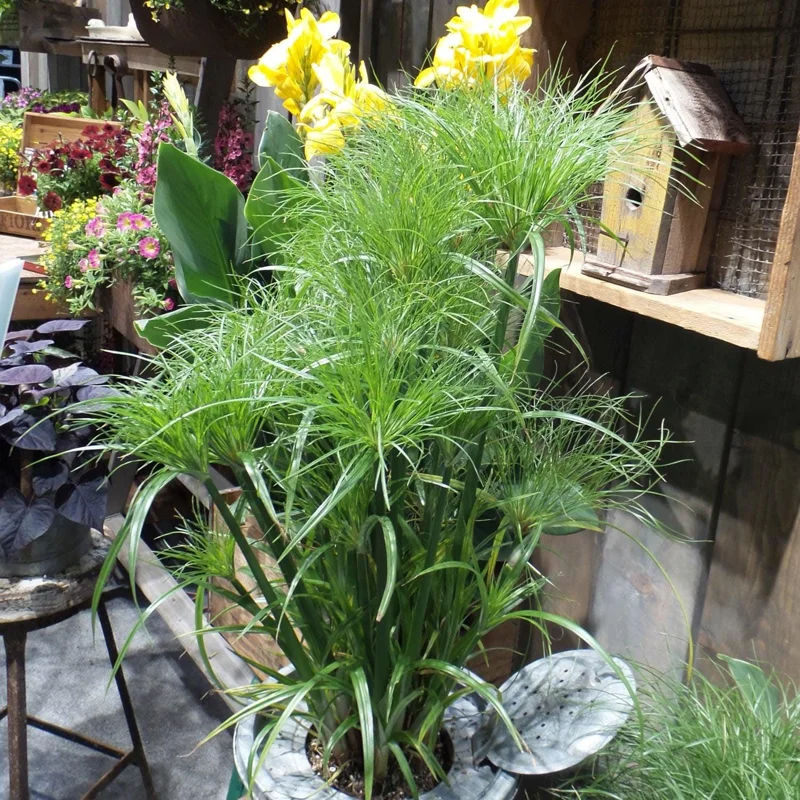
Prince Tut Papyrus Live Plant – 1 ft Tall – Ships in 6 inch Pot – Outdoor Aquatic Accent
$51.76
Bring a touch of the tropics to your outdoor space with the stunning Prince Tut Papyrus live plant. Standing 1 ft tall and shipped in a 6-inch pot, this dwarf papyrus variety is perfect for water gardens, ponds, or container arrangements, offering unique texture and vertical interest.
Estimated arrival
Sep 14
Sep 19 - Sep 21
Sep 24 - Sep 28
Shop With Confidence
30-Day Plant Health Guarantee
Arrives damaged? We’ll replace it free — see our return policy.
Responsive Support
Email us anytime, we reply within 1 business day.
Expert Packaging
Temperature-controlled shipping to protect your plants in transit.
Secure Checkout
Pay safely with Visa, Mastercard, PayPal.
Plant Specifications
-
USDA Hardiness Zone
USDA Zones 9-11 (Perennial), Colder Zones (Annual) -
Soil Type
Heavy, loamy, consistently wet soil or shallow water -
Sunlight Exposure
Full sun to partial shade (6+ hours direct sun) -
Expected Planting Period
Spring to early summer
Overview
Introduce an exotic flair to your water feature or landscape with the captivating Prince Tut Papyrus live plant. This unique cultivar of Cyperus papyrus, often known as dwarf papyrus, is celebrated for its lush, umbrella-like bracts atop sturdy, triangular stems. Unlike its larger relatives, ‘Prince Tut’ maintains a more manageable size, typically reaching 1 to 2 feet in height, making it an ideal choice for smaller ponds, bog gardens, or as a striking accent in container plantings. This live plant arrives ready to thrive, bringing an immediate architectural element and a touch of the Nile to your outdoor sanctuary. Its distinctive form and vibrant green foliage create a focal point, drawing the eye and adding a serene, natural ambiance to any setting. Whether you’re an experienced aquatic gardener or just starting, the Prince Tut Papyrus live plant offers an easy-to-grow, show-stopping addition.
The Prince Tut Papyrus live plant is a perennial sedge that thrives in wet conditions, making it perfectly suited for aquatic environments. Its fast-growing nature quickly fills out spaces, providing excellent texture and a sense of lushness. The slender, arching stems culminate in a burst of fine, thread-like leaves, creating a soft, airy appearance that sways gracefully with the breeze. This plant is not only beautiful but also relatively low maintenance, rewarding gardeners with its consistent beauty throughout the growing season.
Key Benefits
The Prince Tut Papyrus live plant offers a multitude of benefits that make it a superb choice for various landscape designs:
- Dramatic Visual Appeal: The unique, umbrella-like foliage and strong vertical lines of the Prince Tut Papyrus live plant create a stunning architectural statement in any garden. It adds an exotic, tropical feel that transforms ordinary spaces into serene oases.
- Excellent for Water Features: Thriving in consistently wet soil or shallow water, this plant is perfectly suited for ponds, water gardens, bog areas, and rain gardens, enhancing the natural beauty of aquatic environments.
- Low Maintenance: Once established, the Prince Tut Papyrus live plant requires minimal care. It’s relatively pest-free and disease-resistant, making it an easy-to-grow option for busy gardeners.
- Versatile Container Plant: Its compact size allows it to be grown effectively in containers, either as a standalone specimen or as a ‘thriller’ element in mixed arrangements, especially those designed for moist conditions.
- Adds Texture and Movement: The fine, feathery foliage provides a delicate texture that contrasts beautifully with broader-leafed plants, while its graceful swaying in the wind adds dynamic movement to the garden.
- Fast Growing: This plant establishes quickly, rapidly filling out its designated space and providing lush greenery in a relatively short period.
- Natural Filter: Like many aquatic plants, papyrus can help filter water, contributing to a healthier ecosystem in ponds and water features.
Plant Care & Growing Tips
Caring for your Prince Tut Papyrus live plant is straightforward, especially when its preferred bog-like conditions are met. This plant thrives in full sun to partial shade, requiring at least 6 hours of direct sunlight daily for optimal growth and vigor. In hotter climates, some afternoon shade can prevent scorching. The most critical aspect of its care is consistent moisture; it must never be allowed to dry out. Plant it in consistently wet soil, or ideally, in shallow water (up to 6 inches deep) at the edge of a pond or water garden. If growing in a container, ensure the pot has no drainage holes or place the pot in a saucer filled with water to keep the roots constantly submerged.
For soil, a heavy, loamy soil with plenty of organic matter is ideal. Standard potting mix can work if kept consistently saturated. The dwarf papyrus plant is generally hardy in USDA zones 9-11, where it can be grown as a perennial. In colder regions, it can be treated as an annual or brought indoors before the first frost to overwinter in a bright, consistently moist location. Fertilize sparingly during the growing season (spring through summer) with a balanced liquid fertilizer, especially if growing in containers, as nutrients can leach out of water faster. Watch out for common pests like spider mites if grown indoors, and ensure good air circulation. Proper care will ensure your Cyperus papyrus Prince Tut remains a vibrant and healthy addition to your garden.
Propagation of Prince Tut Papyrus live plant can be achieved by dividing the clumps in spring or by rooting stem cuttings. To root a cutting, simply trim a stem about 6-8 inches long, remove the lower foliage, and submerge the top umbrella-like cluster (upside down) in a jar of water. Roots will emerge from the center of the cluster in a few weeks. This makes it easy to expand your collection or share with friends. Understanding how to grow papyrus effectively involves mimicking its natural wetland habitat, guaranteeing a robust and visually appealing plant.
Size & Details
This Prince Tut Papyrus live plant arrives as a well-established specimen, typically measuring 1 ft tall from the base of the pot to the tip of the foliage. It is carefully shipped in a 6-inch pot, providing a healthy root system ready for immediate planting. Each plant typically features 3 to 6 strong, triangular stems, each topped with the characteristic feathery bracts. This dwarf variety is known for its moderate growth rate, quickly reaching its mature height of 1 to 2 feet within a single growing season under optimal conditions. It forms dense clumps, spreading slowly by rhizomes, making it an excellent choice for filling out pond edges or creating a lush, tropical border in consistently wet areas. The plant’s overall spread can reach 1 to 2 feet, creating a significant visual impact.
The Prince Tut Papyrus is an herbaceous perennial in warmer zones, providing year-round interest, while in colder climates, it is best grown as a seasonal annual or overwintered indoors. Its mature height makes it a perfect mid-ground or background plant in aquatic arrangements, adding vertical dimension without overpowering smaller features. You will receive one healthy plant, ready to transition into your garden or container, bringing its unique charm and texture to your outdoor space.
Frequently Asked Questions
- Q: How big does this Prince Tut Papyrus live plant get? A: The Prince Tut Papyrus live plant typically grows to a mature height of 1 to 2 feet tall. It is considered a dwarf variety of papyrus, making it more manageable for various garden settings compared to its larger relatives.
- Q: What size pot does it come in? A: This plant is shipped in a 6-inch pot, providing a good starting size with an established root system for successful transplanting into your garden or a larger container.
- Q: Is this an indoor or outdoor plant? A: The Prince Tut Papyrus live plant is primarily an outdoor aquatic plant, thriving in ponds, bog gardens, or wet containers. In colder climates (below USDA Zone 9), it can be overwintered indoors in a bright, consistently moist location.
- Q: How much sunlight does it need? A: This plant prefers full sun to partial shade. For the best growth and most vibrant foliage, aim for at least 6 hours of direct sunlight per day. In very hot climates, some afternoon shade can be beneficial.
- Q: Is this plant easy to care for? A: Yes, the Prince Tut Papyrus live plant is considered relatively easy to care for. Its primary requirement is consistent moisture; it must never dry out. Beyond that, it’s quite resilient and low maintenance. This makes it an excellent choice for those interested in aquatic garden plants.
- Q: What condition will it arrive in? A: Your plant will arrive as a healthy, live specimen, well-rooted in its 6-inch pot. We take care to package plants securely to minimize stress during transit, ensuring it’s ready to thrive in your garden.
- Q: What’s the minimum temperature this plant can tolerate? A: The Prince Tut Papyrus live plant is hardy in USDA Zones 9-11, meaning it can tolerate temperatures down to about 20-30°F (-6 to -1°C). In colder zones, it should be brought indoors or treated as an annual.
- Q: Does this plant have any special soil requirements? A: It thrives in heavy, consistently wet, loamy soil rich in organic matter. If planting in a pot, ensure it’s a non-draining container or keep the pot in a saucer of water to maintain saturation.
- Q: Can I grow this plant in a regular garden bed? A: Only if the garden bed can be kept consistently saturated with water, mimicking bog-like conditions. It will not tolerate dry soil and will quickly decline without adequate moisture.
- Q: When is the best time to plant Prince Tut Papyrus? A: The best time to plant is in spring or early summer after all danger of frost has passed, allowing the plant ample time to establish itself before the peak growing season.
Be the first to review “Prince Tut Papyrus Live Plant – 1 ft Tall – Ships in 6 inch Pot – Outdoor Aquatic Accent”
People Also Viewed
Reviews
There are no reviews yet.