
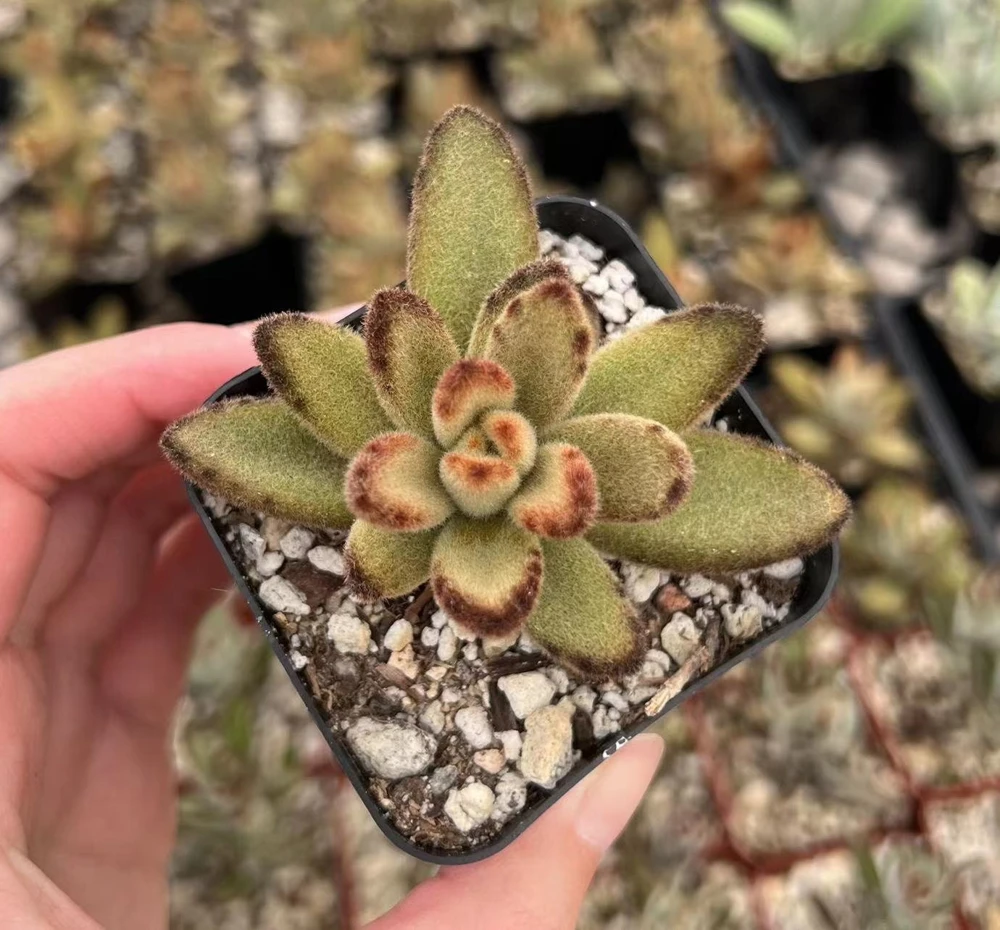
Kalanchoe Tomentosa Chocolate Soldier Live Plant – 2 Inch Pot – Indoor Succulent
Original price was: $37.99.$12.99Current price is: $12.99.
Introduce a touch of unique texture to your plant collection with the kalanchoe tomentosa chocolate soldier. This charming fuzzy succulent plant comes in a 2-inch pot, perfect for windowsills or desks. Known for its velvety, brown-tipped leaves, it’s an ideal succulent for beginners and experienced collectors alike.
Estimated arrival
Oct 15
Oct 20 - Oct 22
Oct 25 - Oct 29
Shop With Confidence
30-Day Plant Health Guarantee
Arrives damaged? We’ll replace it free — see our return policy.
Responsive Support
Email us anytime, we reply within 1 business day.
Expert Packaging
Temperature-controlled shipping to protect your plants in transit.
Secure Checkout
Pay safely with Visa, Mastercard, PayPal.
Plant Specifications
-
USDA Hardiness Zone
USDA zones 9–11 (outdoors), typically grown indoors -
Soil Type
Well-draining succulent or cactus mix -
Sunlight Exposure
Bright indirect light -
Expected Planting Period
Year-round indoors
Overview
Bring home the captivating kalanchoe tomentosa chocolate soldier, a delightful succulent known for its distinctive appearance and easy-care nature. This charming live plant, often referred to as ‘Panda Plant’ or ‘Chocolate Soldier Kalanchoe,’ features thick, velvety leaves covered in fine, soft hairs. The edges and tips of the leaves often display a rich, reddish-brown hue, giving it its ‘chocolate soldier’ moniker. Originating from Madagascar, this unique succulent is a fantastic addition to any indoor plant collection, offering both visual interest and a tactile experience. Its compact size makes it perfect for small spaces, terrariums, or as a desk companion. Whether you’re a seasoned plant enthusiast or seeking a low-maintenance beginner-friendly option, the kalanchoe tomentosa chocolate soldier is sure to enchant with its fuzzy foliage and striking coloration.
This particular offering provides a healthy, vibrant kalanchoe tomentosa chocolate soldier live plant, ready to thrive in its new environment. It’s an excellent choice for those looking to expand their succulent garden with a truly unique specimen. Its resilience and adaptability make it a favorite among busy plant parents, requiring minimal attention while still delivering maximum aesthetic appeal. Embrace the beauty of this fuzzy succulent and enjoy its distinctive charm.
Key Benefits
The kalanchoe tomentosa chocolate soldier offers numerous advantages, making it a popular choice for indoor gardeners. Its unique texture and color provide a focal point in any plant arrangement, while its robust nature ensures long-lasting beauty.
- Unique Aesthetic Appeal: The velvety, fuzzy leaves with their distinctive brown tips make this fuzzy succulent plant a standout. It adds a fascinating textural element to any plant collection and is a great conversation starter.
- Low Maintenance: As a succulent, the kalanchoe tomentosa chocolate soldier is incredibly forgiving and requires minimal watering and care, making it an ideal succulent for beginners or those with busy schedules.
- Compact Size: Perfect for small spaces, windowsills, desks, or as part of a succulent arrangement. Its manageable size means it won’t outgrow its spot quickly.
- Drought Tolerant: This plant stores water in its leaves, allowing it to withstand periods of dryness. This characteristic makes it resilient and reduces the frequency of watering.
- Air Purification: Like many houseplants, the indoor kalanchoe plant can contribute to better indoor air quality by absorbing common toxins, enhancing your living environment.
- Visually Striking Coloration: The reddish-brown ‘chocolate’ tips on the green-gray fuzzy leaves provide a beautiful contrast, adding warmth and interest to your decor.
- Pet-Friendly (with caution): While some Kalanchoe species are toxic, Kalanchoe Tomentosa is generally considered less toxic, though ingestion should still be avoided for pets. Always supervise pets around plants.
Plant Care & Growing Tips
Caring for your kalanchoe tomentosa chocolate soldier is straightforward, ensuring a rewarding experience even for novice gardeners. Proper light, watering, and soil are key to its success. This fuzzy succulent plant thrives with a bit of neglect rather than over-attentiveness.
For optimal growth, provide your kalanchoe tomentosa chocolate soldier with plenty of bright, indirect light. A south or west-facing window is usually ideal. While it can tolerate some direct morning sun, intense afternoon sun can scorch its delicate fuzzy leaves. If grown outdoors, ensure it receives partial shade during the hottest parts of the day. Inadequate light can lead to leggy growth and duller leaf coloration. Rotate the pot occasionally to ensure even growth and exposure to light.
Watering is the most crucial aspect of succulent care. Allow the soil to dry out completely between waterings. When you do water, do so thoroughly until water drains from the bottom of the pot. Overwatering is the most common cause of succulent demise, leading to root rot. Reduce watering significantly during the cooler, dormant months. The ideal soil for this indoor kalanchoe plant is a well-draining succulent or cactus mix. This type of soil prevents water from sitting around the roots, mimicking its natural arid habitat. A pot with drainage holes is absolutely essential.
The kalanchoe tomentosa chocolate soldier prefers average room temperatures, typically between 60-75°F (15-24°C). Protect it from temperatures below 40°F (4°C) as it is not frost-tolerant. Humidity is not a major concern; average household humidity is perfectly fine. Fertilize sparingly, if at all. A diluted succulent fertilizer applied once or twice during the growing season (spring and summer) is sufficient. Pruning is rarely needed, but you can remove any leggy stems or spent flower stalks to maintain its compact shape. Watch out for common pests like mealybugs, which can be wiped away with a cotton swab dipped in rubbing alcohol.
Size & Details
This offering is for a vibrant kalanchoe tomentosa chocolate soldier live plant, carefully cultivated and ready for its new home. It is provided in a 2-inch nursery pot, a perfect starter size that allows you to observe its growth and eventually repot as it matures. At this stage, the plant typically stands about 2-4 inches tall, with a similar spread, making it a compact and desk-friendly size. The growth rate is moderate, allowing you to enjoy its current form for a while before needing a larger container. When mature, this fuzzy succulent plant can reach up to 1-2 feet in height, though it often remains smaller when grown indoors in pots. It will be shipped with its pot and soil, minimizing stress during transit and ensuring it arrives ready to display and thrive. Expect a healthy, established plant with the characteristic velvety leaves and brown tips.
Frequently Asked Questions
- Q: How big does this plant get? A: The kalanchoe tomentosa chocolate soldier typically grows to about 1-2 feet tall when mature, but it often stays smaller in indoor pots. The plant you receive will be in a 2-inch pot, standing approximately 2-4 inches tall.
- Q: Is this an indoor or outdoor plant? A: While it can be grown outdoors in warm climates (USDA zones 9-11), the kalanchoe tomentosa chocolate soldier is primarily an indoor plant in most regions. It thrives in bright, indirect indoor light.
- Q: How much sunlight does it need? A: This fuzzy succulent plant requires bright, indirect sunlight. A few hours of direct morning sun is acceptable, but protect it from intense afternoon sun, which can cause leaf burn.
- Q: Is this plant easy to care for? A: Yes, the kalanchoe tomentosa chocolate soldier is considered a very easy-care plant, making it an excellent succulent for beginners. Its drought tolerance and minimal needs contribute to its low-maintenance reputation.
- Q: What condition will it arrive in? A: Your plant will arrive healthy and established, shipped in its 2-inch nursery pot with soil. We take great care to ensure it is well-packaged for safe transit.
- Q: How often should I water my chocolate soldier kalanchoe? A: Water sparingly. Allow the soil to dry out completely between waterings, then water thoroughly until it drains from the bottom. Reduce watering frequency in cooler months.
- Q: Is the Kalanchoe Tomentosa safe for pets? A: While some Kalanchoe species are highly toxic, Kalanchoe Tomentosa is generally considered to be less toxic. However, it’s always best to keep plants out of reach of pets to prevent any ingestion.
- Q: What kind of soil is best for this plant? A: The kalanchoe tomentosa chocolate soldier thrives in a well-draining succulent or cactus potting mix. Good drainage is crucial to prevent root rot.
- Q: Can I propagate this plant? A: Yes, ‘Chocolate Soldier’ Kalanchoe can be easily propagated from stem or leaf cuttings. Allow the cuttings to callus for a few days before planting them in well-draining soil.
- Q: Why are the tips of my kalanchoe tomentosa turning brown? A: The brown tips are a natural and desirable characteristic of the kalanchoe tomentosa chocolate soldier, giving it its ‘chocolate’ name. It’s not a sign of distress unless the leaves are also becoming soft or mushy.
Be the first to review “Kalanchoe Tomentosa Chocolate Soldier Live Plant – 2 Inch Pot – Indoor Succulent”
People Also Viewed
Uncategorized
Rhododendron PJM – Lilac Purple Blooms Rhododendron Flowers Plant – #3 Container Size Plant

Reviews
There are no reviews yet.