
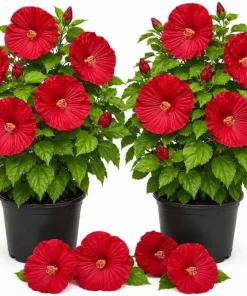
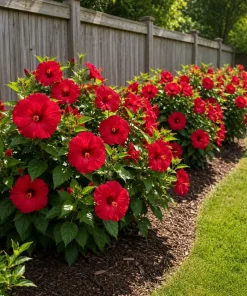
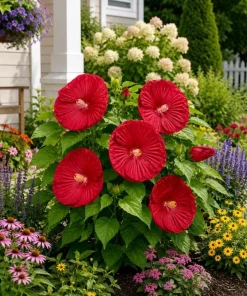
2 Red Hibiscus Live Plants for Garden & Patio – 4-6 Inch Tall
Original price was: $48.99.$23.99Current price is: $23.99.
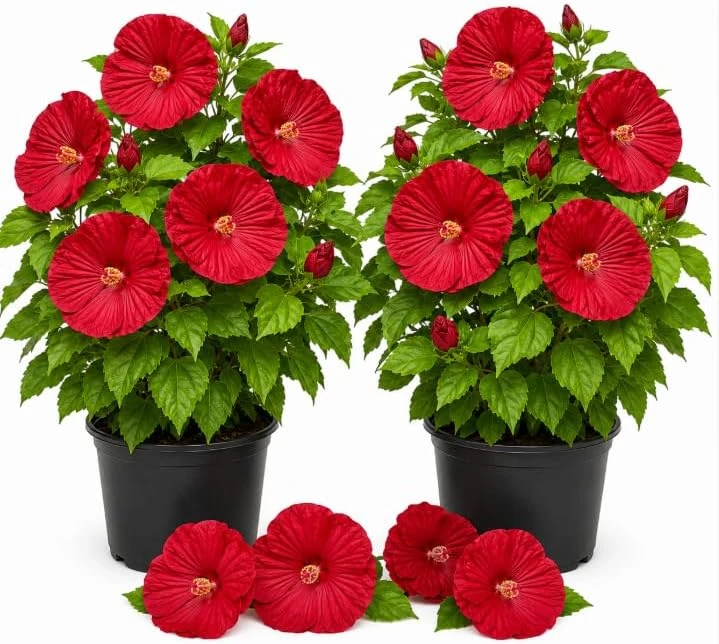
Bring a touch of the tropics to your outdoor space with these beautiful red hibiscus live plant specimens. Perfect for gardens and patios, these 4-6 inch tall plants promise stunning blooms from spring to fall. Enjoy the vibrant color and easy-care nature of these popular flowering shrubs.
Estimated arrival
Oct 14
Oct 19 - Oct 21
Oct 24 - Oct 28
Shop With Confidence
30-Day Plant Health Guarantee
Arrives damaged? We’ll replace it free — see our return policy.
Responsive Support
Email us anytime, we reply within 1 business day.
Expert Packaging
Temperature-controlled shipping to protect your plants in transit.
Secure Checkout
Pay safely with Visa, Mastercard, PayPal.
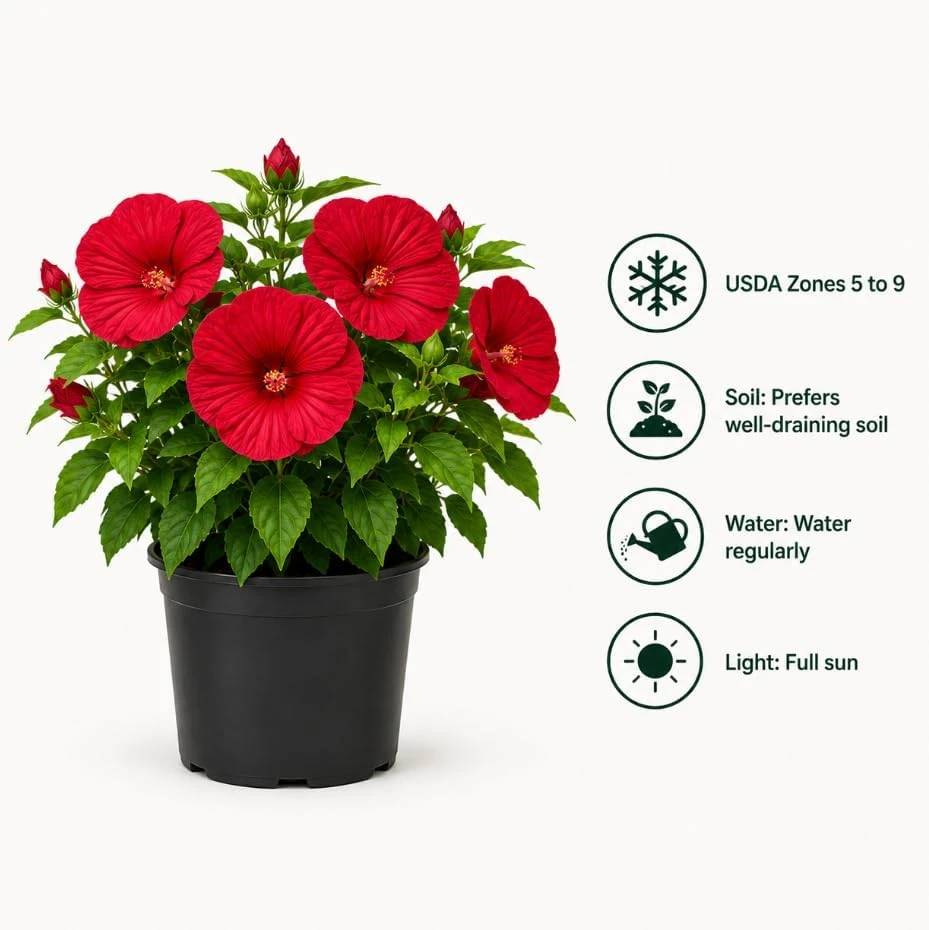
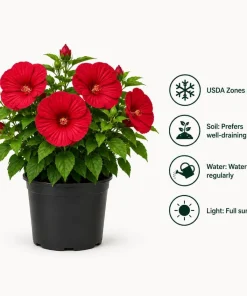
Plant Specifications
-
USDA Hardiness Zone
USDA Zones 5 to 9 -
Soil Type
Well-draining soil -
Sunlight Exposure
Full sun -
Expected Planting Period
Spring to fall
Overview
Transform your outdoor living areas into a vibrant paradise with the addition of a red hibiscus live plant. These stunning tropical flowering plants are renowned for their large, showy blooms that captivate with their intense red hue. Ideal for both seasoned gardeners and beginners, these hibiscus plants arrive ready for planting, offering an instant splash of color and exotic flair to your garden beds, patio containers, or as a focal point in your landscape. Each plant measures between 4-6 inches tall, making them a manageable size for establishing roots and growing into magnificent specimens. The hibiscus is a beloved genus, known scientifically as Hibiscus rosa-sinensis or similar tropical varieties, celebrated for its continuous blooming throughout the warmer months. Cultivating a red hibiscus live plant is a rewarding experience, bringing a touch of the tropics right to your doorstep.
Our selection of red hibiscus live plant specimens is chosen for their vigor and potential to produce abundant flowers. These plants thrive in conditions that mimic their native tropical environments, requiring careful attention to sunlight and watering, which we detail in the care section. Whether you’re looking to create a lush, tropical garden theme or simply want to add some dramatic color, these hibiscus plants are an excellent choice. Their robust nature ensures they will quickly settle into their new home and begin to flourish, providing beauty and enjoyment for many seasons to come. Prepare to be enchanted by the timeless elegance and vibrant charm of these exquisite red hibiscus flowers.
Key Benefits
Adding a red hibiscus live plant to your garden or patio offers numerous advantages, enhancing both the aesthetic appeal and the overall ambiance of your outdoor space. These plants are not just beautiful; they are also relatively straightforward to care for, making them a fantastic choice for many gardeners.
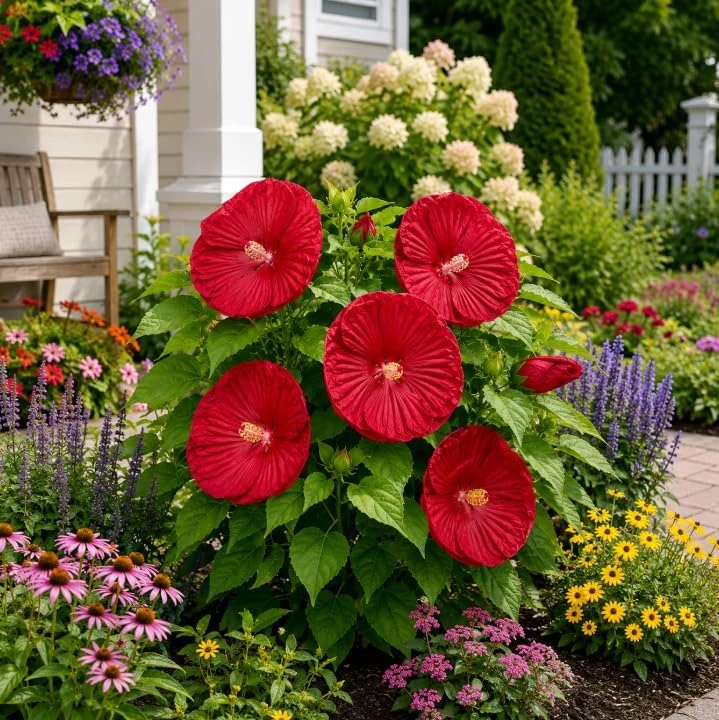
- Stunning Visual Impact: The large, brilliant red flowers of the hibiscus create an immediate focal point, drawing the eye and adding a luxurious, tropical feel to any setting. Their vibrant color stands out against green foliage.
- Extended Blooming Season: Enjoy a long period of bloom, typically from spring through fall, providing continuous color and beauty when many other plants have faded. This extended season ensures your garden remains lively.
- Attracts Pollinators: These beautiful flowers are a magnet for hummingbirds and butterflies, bringing delightful wildlife to your garden and contributing to local ecosystem health. Observe nature at its best.
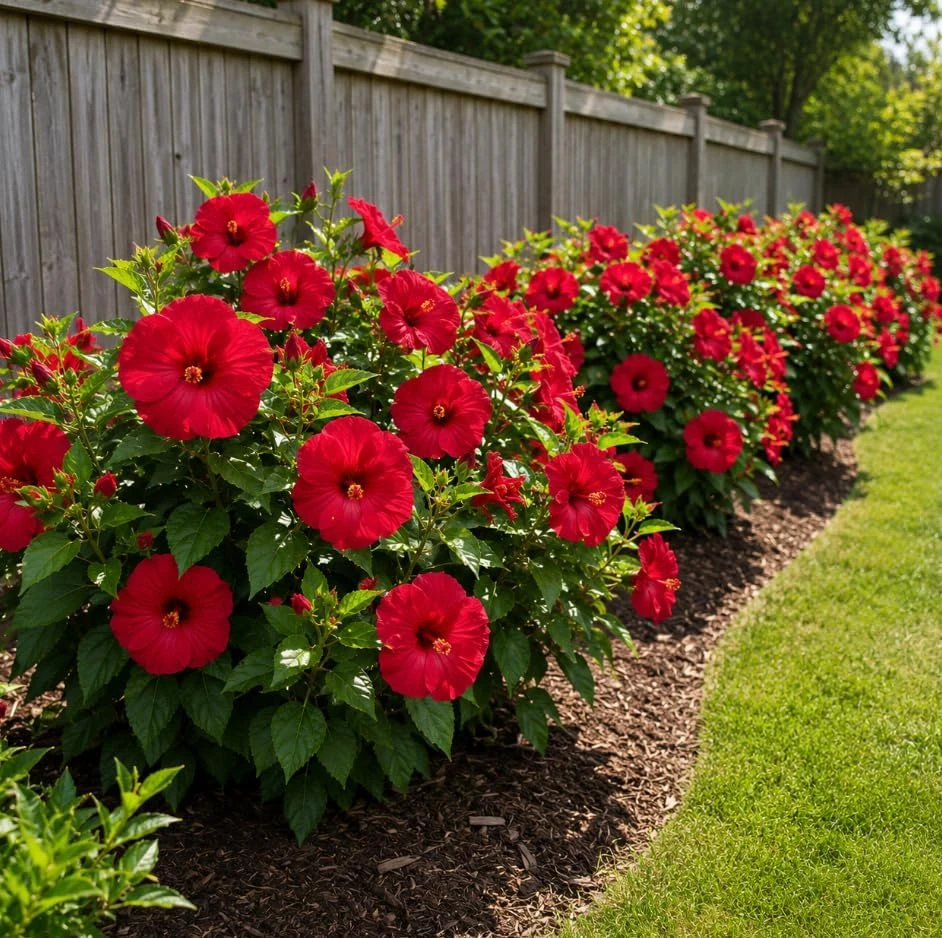
- Versatile Landscaping: Perfect for planting in garden beds as a shrub, creating a vibrant hedge, or growing in large containers on patios, balconies, or near entryways. They adapt well to various outdoor settings.
- Relatively Low Maintenance: Once established, the tropical hibiscus care is quite manageable, requiring consistent watering and occasional feeding to maintain its lush growth and prolific flowering. They are not overly demanding.
- Air Purification: Like many living plants, hibiscus contributes to a healthier environment by absorbing carbon dioxide and releasing oxygen, slightly improving the air quality around your home.
- Symbolic Beauty: In many cultures, the hibiscus flower symbolizes delicate beauty, joy, and hospitality, adding a deeper layer of meaning to your garden.
Plant Care & Growing Tips
Successful cultivation of your red hibiscus live plant hinges on providing the right environmental conditions and consistent care. These tropical beauties thrive in warm climates and require specific attention to ensure they produce their spectacular blooms.
Sunlight and Temperature: Hibiscus plants are sun-lovers. They require full sun, meaning at least 6 hours of direct sunlight per day, to achieve their best flowering potential. In hotter climates, some afternoon shade can be beneficial to protect them from intense scorching. Ideal temperatures for these plants are between 65°F and 90°F. They are sensitive to frost, so if you live in a colder region (outside USDA zones 9-11), consider growing them in containers that can be moved indoors during winter. This approach is key to long-term tropical hibiscus care.
Soil and Watering: These plants prefer well-draining soil that is rich in organic matter. A slightly acidic to neutral pH (6.0-7.0) is ideal. When planting in containers, use a high-quality potting mix designed for flowering plants. Consistent moisture is crucial, especially during the blooming season. Water regularly, ensuring the soil remains evenly moist but not waterlogged. Allow the top inch of soil to dry out slightly between waterings. Reduce watering during cooler months or if the plant is brought indoors. Proper watering is a critical part of ensuring your hibiscus for garden thrives.
Fertilization and Pruning: Feed your hibiscus with a balanced, slow-release fertilizer or a liquid feed formulated for flowering plants every 2-4 weeks during the growing season (spring to fall). Look for a fertilizer with a higher potassium content to encourage more blooms. Pruning is essential for maintaining shape, promoting bushier growth, and encouraging more flowers. Light pruning can be done throughout the growing season, while a more significant cutback can be done in late winter or early spring before new growth emerges. This helps maintain a healthy red flowering shrub.
Size & Details
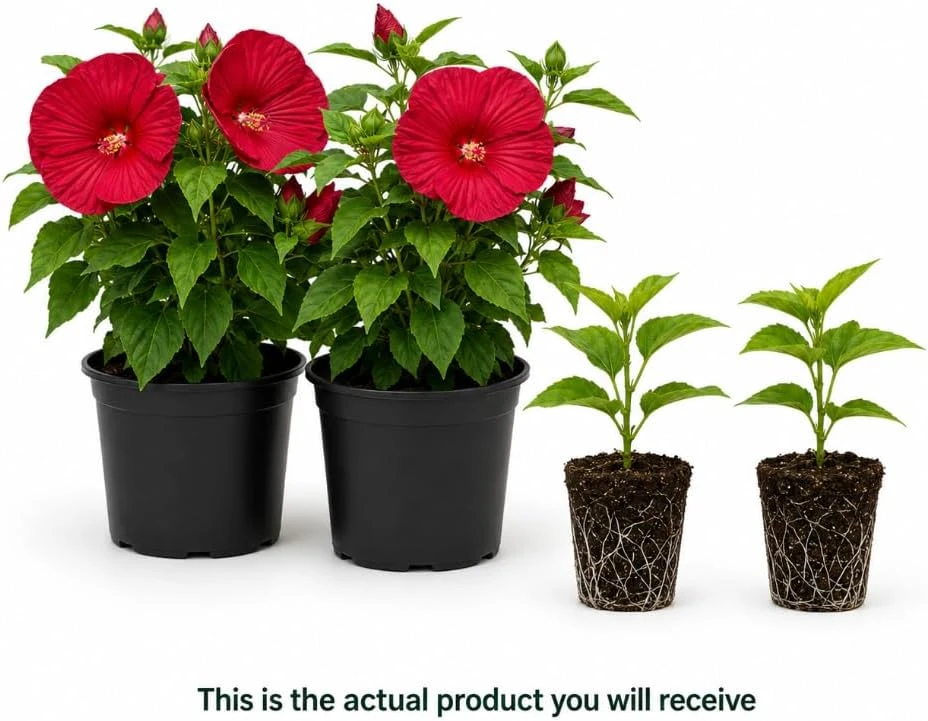
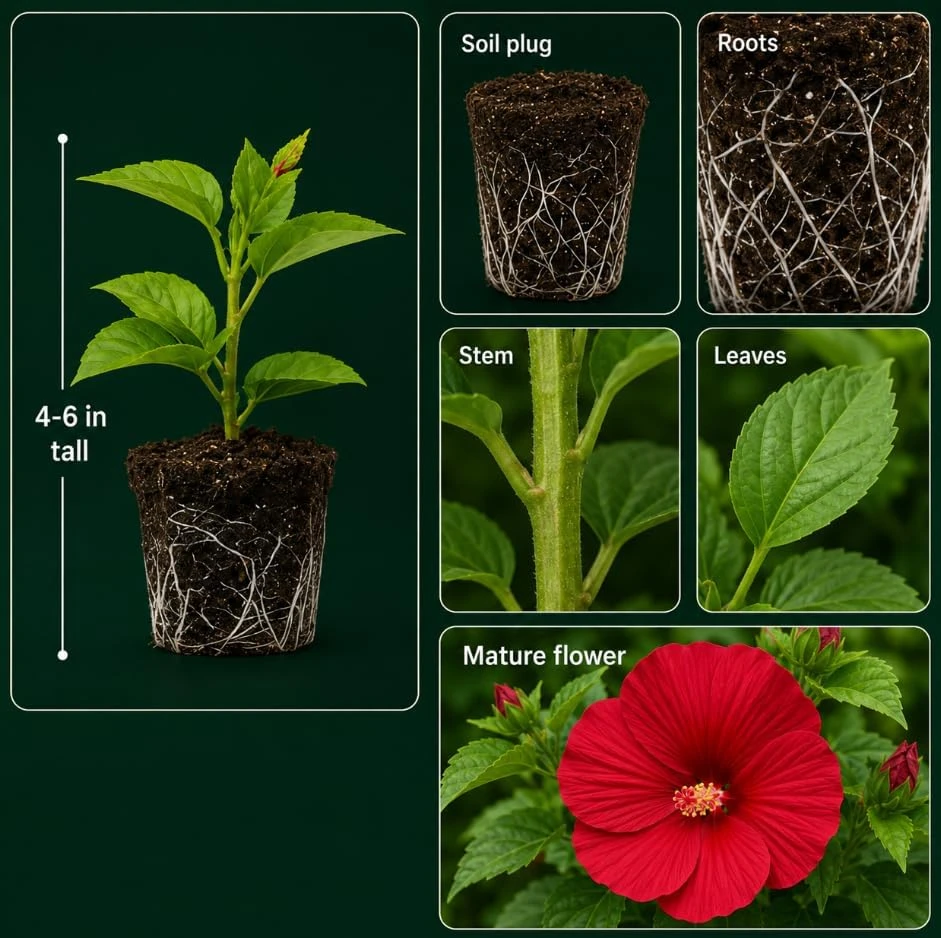
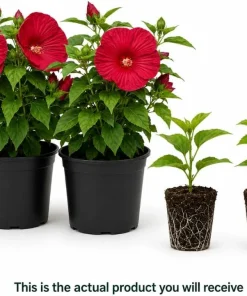
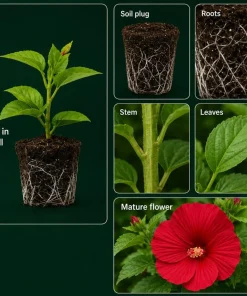
Each order includes two individual red hibiscus live plant specimens, each measuring approximately 4-6 inches tall from the base of the plant to the tip of its tallest leaf. These plants are shipped without a pot, as bare-root or with minimal soil around the root ball, which is a common and effective method for shipping young plants to minimize shock and ensure healthy establishment upon arrival. They are ready to be planted directly into your garden beds or chosen containers. These hibiscus plants are fast-growing under optimal conditions, and with proper care, you can expect them to reach mature sizes of 3-5 feet tall and 2-4 feet wide, depending on your climate and pruning practices. The vibrant red blooms will typically emerge within the first growing season after planting, providing a spectacular display from late spring through early fall. These are excellent choices if you’re looking for a striking red flowering shrub.
Frequently Asked Questions
- Q: How big does this red hibiscus live plant get? A: With proper care and ideal conditions, these hibiscus plants typically grow to a mature size of 3-5 feet tall and 2-4 feet wide, forming a beautiful, bushy shrub.
- Q: What size pot should I use for these hibiscus plants? A: For initial planting, a 6-8 inch diameter pot is suitable. As the plant grows, you’ll want to repot it into a larger container, such as a 10-14 inch pot, to accommodate its root system.
- Q: Is this an indoor or outdoor plant? A: This tropical hibiscus is primarily an outdoor plant, thriving in full sun. However, in regions with cold winters (below USDA Zone 9), it can be grown in containers and brought indoors to overwinter.
- Q: How much sunlight does it need? A: For the best blooms, your red hibiscus live plant requires at least 6 hours of direct sunlight per day. In very hot climates, a little afternoon shade can be beneficial.
- Q: Is this plant easy to care for? Is it good for beginners? A: Yes, these hibiscus plants are considered relatively easy to care for, especially if you can provide consistent warmth, sunlight, and moisture. They are a great choice for beginners looking for a rewarding flowering plant.
- Q: What condition will the plants arrive in? A: The plants will arrive as 4-6 inch tall live specimens, shipped without a pot, with their roots carefully packaged to ensure they remain moist and healthy during transit.
- Q: When is the best time to plant a hibiscus for garden? A: The best time to plant is in the spring after all danger of frost has passed, allowing the plant ample time to establish itself before the heat of summer or the chill of winter.
- Q: Will it survive winter in my zone? A: These tropical hibiscus are hardy in USDA Zones 9-11. If you live in a colder zone, you will need to protect them from frost by bringing them indoors during winter months.
- Q: What kind of soil does a red flowering shrub like this prefer? A: It prefers well-draining soil that is rich in organic matter, with a slightly acidic to neutral pH. A good quality potting mix works well for container planting.
- Q: Can you provide a hibiscus planting guide? A: Plant in well-draining soil in full sun. Water regularly to keep the soil consistently moist. Fertilize during the growing season and prune to maintain shape and encourage blooms. Protect from frost.
Be the first to review “2 Red Hibiscus Live Plants for Garden & Patio – 4-6 Inch Tall”
People Also Viewed
Fruits
Tophat Dwarf Blueberry Plant – 2 Starter Plugs – Vaccinium angustifolium x corymbosum – Live Bush
Flower Seeds
Reviews
There are no reviews yet.